

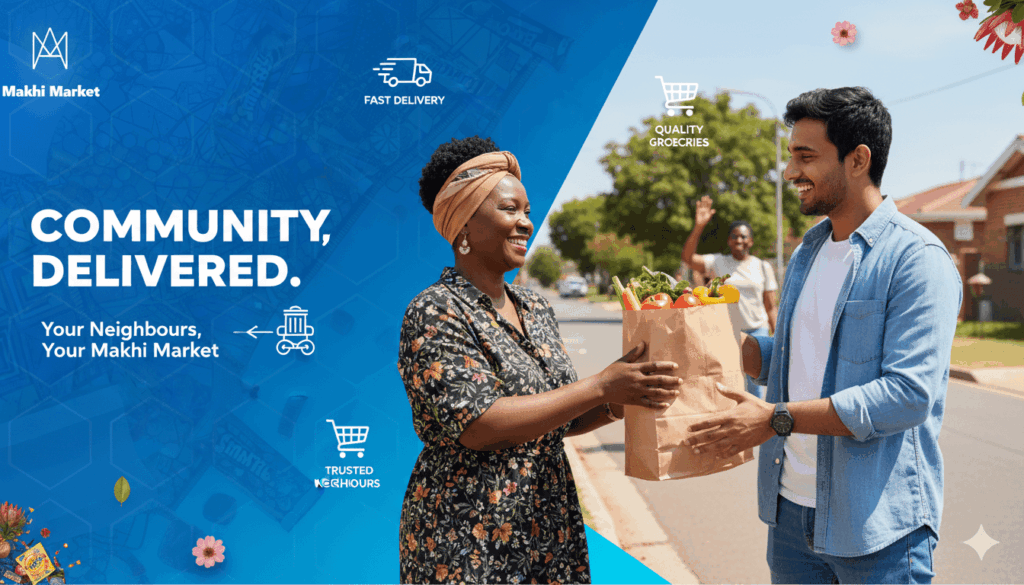
Building Stronger Communities Through Digital Commerce
When we launched MakhiMarket, we weren’t just building another shopping website. We were creating infrastructure for community economic development. Every transaction on our platform is a thread in the fabric of Pretoria’s economic future. Here’s how digital commerce can strengthen, rather than erode, community bonds.
The Problem with Traditional E-Commerce
Most e-commerce platforms extract value from communities:
- Products ship from distant warehouses, bypassing local businesses
- Profits flow to shareholders far from the communities being served
- Local retailers lose customers to faceless online giants
- Neighborhood businesses close, eliminating community gathering places
- Employment moves from local shops to remote logistics centers
The digital economy doesn’t have to work this way. Done right, it can amplify—not replace—the best parts of neighborhood commerce.
The MakhiMarket Model: Community-First Commerce
Every design decision we make asks: “Does this strengthen or weaken community ties?”
Local Vendor Priority: We don’t allow large chain stores or distant sellers. Every vendor must be based in Pretoria and surrounds, ensuring money stays in our economy.
Neighborhood Discovery: Our search prioritizes stores near you, encouraging residents to support their immediate neighbors.
Transparent Vendor Profiles: Shoppers see who they’re buying from—often someone they know or could meet at a neighborhood event.
Community Pages: Our store listings create discoverability for small businesses that can’t afford big marketing budgets.
Fair Fee Structure: We don’t extract punishing commissions. Reasonable platform fees let vendors price competitively while earning sustainable margins.
Economic Impact: Keeping Money Local
Economic research consistently shows that money spent at local businesses recirculates through the community at much higher rates than money sent to distant corporations. Here’s how MakhiMarket creates economic multiplier effects in Pretoria:
Direct Employment: Each successful vendor employs staff—delivery drivers, packers, customer service, inventory managers. These jobs stay local.
Indirect Employment: Vendors buy from local suppliers, wholesalers, and service providers, creating secondary employment.
Entrepreneurial Opportunities: Low barriers to entry mean people who could never afford brick-and-mortar retail can build sustainable businesses.
Skills Development: Vendors learn digital literacy, inventory management, customer service, and business analytics—marketable skills that create long-term value.
Tax Base Strengthening: Formalized digital commerce brings previously informal businesses into the tax system, strengthening municipal finances.
Social Infrastructure: More Than Transactions
Strong communities need more than economic activity—they need social connection. MakhiMarket facilitates this:
Vendor Ratings & Reviews: These create accountability and reputation systems that parallel the trust built in face-to-face commerce.
Community Messaging: Customers can contact vendors directly, recreating the conversational aspect of shopping from someone you know.
Local Product Discovery: Find out your neighbor three streets over makes incredible koeksisters or that the convenience store down the road stocks hard-to-find spices.
Shared Success: When a vendor thrives on MakhiMarket, community members celebrate neighbors’ success rather than distant corporations’ profits.
Case Study: Mamelodi’s Market Renaissance
In Mamelodi, one of Pretoria’s largest townships, traditional spaza shops faced immense pressure from large supermarket chains. When several shop owners joined MakhiMarket:
- Combined, they offered product diversity matching larger stores
- Delivery services competed with supermarket convenience
- Digital payments made shopping safer for customers
- Online visibility attracted customers from across Pretoria
- Shops that might have closed remained viable and profitable
The result? Jobs preserved, community institutions protected, and residents maintaining access to trusted local vendors.
Supporting Informal Economies
South Africa’s informal economy represents significant entrepreneurial activity often excluded from digital commerce. MakhiMarket creates pathways to formalization:
Low Technical Barriers: If you can use WhatsApp, you can run a MakhiMarket store. No advanced technical skills required.
Flexible Business Models: Start part-time while maintaining other income. Scale up as you build confidence and customer base.
Payment Infrastructure: Accept cards and digital payments without expensive POS terminals or merchant accounts.
Inventory Tools: Professionalize your operation with digital inventory tracking that reduces waste and improves cash flow.
Business Credibility: A professional MakhiMarket storefront adds legitimacy that helps secure supplier relationships and potentially even business financing.
Environmental Benefits of Local Commerce
Beyond economic and social impacts, community-focused commerce has environmental advantages:
- Reduced Transportation: Local delivery means shorter distances, less fuel, fewer emissions
- Efficient Routing: Vendors delivering multiple orders in their neighborhood use fuel far more efficiently than individual shopping trips
- Less Packaging Waste: Direct seller-to-customer reduces excessive packaging needed for long-distance shipping
- Local Sourcing: Many vendors buy from nearby suppliers, further reducing transportation’s environmental footprint
Digital Inclusion Through Community Commerce
MakhiMarket deliberately designs for inclusivity:
Multi-Language Support: English, Afrikaans, and Zulu interfaces ensure language isn’t a barrier to participation.
Multiple Payment Options: Cash on delivery, cards, mobile money—customers use what works for them.
Affordable Data Use: Lightweight site design minimizes data consumption for South African users.
SMS Notifications: Transaction updates via SMS don’t require smartphones or constant internet access.
Phone Support: Vendors can list contact numbers for customers who prefer calling to ordering online.
Building Resilience: What We Learned from COVID-19
The pandemic revealed the fragility of commerce that depends on physical presence. Communities with strong local digital infrastructure fared better:
- Vendors who’d built online presence before lockdowns maintained income streams
- Communities with delivery infrastructure kept essential goods flowing
- Digital payment options reduced virus transmission risks
- Local vendors adapted faster than large chains to community-specific needs
MakhiMarket accelerated during lockdowns not because we capitalized on crisis, but because community-focused digital infrastructure proved invaluable during disruption.
Youth Employment and Digital Opportunities
Pretoria’s youth unemployment crisis requires innovative solutions. MakhiMarket creates opportunities:
Delivery Services: Young people with bicycles or vehicles earn income through deliveries, building work experience and customer service skills.
Digital Assistants: Less tech-savvy vendors hire young people to manage their online storefronts, creating digital jobs.
Product Photography: Vendors need quality product images, creating opportunities for aspiring photographers.
Entrepreneurship: Young people can start arbitrage or service businesses with minimal capital.
Skills Transfer: Working with MakhiMarket vendors teaches young people business skills often missing from formal education.
Cultural Preservation Through Commerce
Traditional foods, crafts, and products carry cultural knowledge. MakhiMarket helps preserve these:
- Traditional food makers reach customers beyond their immediate neighborhood
- Recipes and techniques passed down generations find economic viability
- Cultural products compete with mass-manufactured alternatives
- Knowledge holders can monetize traditional skills
When a gogos’s koeksisters can be ordered online and delivered across Pretoria, tradition meets technology, and both are strengthened.
Measuring Community Impact
We track metrics that matter to community development:
- Vendor Survival Rates: Are small businesses thriving or struggling on our platform?
- Local Employment Created: How many jobs has the platform generated?
- Transaction Velocity: How quickly does money recirculate through local economy?
- Geographic Distribution: Are benefits spreading across neighborhoods or concentrating?
- New Business Formation: Are people starting new ventures because of platform access?
The Path Forward: Scaling Community Impact
Our vision for the next five years:
Expand to More Neighborhoods: Every Pretoria suburb deserves digital commerce infrastructure.
Vendor Training Programs: Formalized education helping business owners maximize platform benefits.
Community Pickup Points: Partner with trusted local businesses to offer pickup options, reducing delivery costs.
Cooperative Buying: Enable groups to pool orders for bulk purchasing power.
Local Product Manufacturing: Connect makers with market data to guide production decisions.
Beyond Transactions: Building Social Capital
Economic transactions can build or erode trust. MakhiMarket chooses to build:
- Every successful transaction reinforces trust in digital systems
- Positive vendor interactions create social bonds
- Community members discover neighbors’ capabilities and businesses
- Shared platform participation creates sense of collective enterprise
- Success stories inspire others, multiplying entrepreneurial activity
The Ripple Effect
When a customer buys biltong from a local vendor on MakhiMarket:
- The vendor earns income that pays rent to a local landlord
- They buy meat from a local butcher who employs local staff
- The delivery driver earns money they spend at other local businesses
- Platform fees fund technology improvements benefiting all vendors
- Success encourages others to start or formalize their businesses
- Local tax revenues increase, funding community services
One transaction. Six community-strengthening effects.
Your Role in Community Building
Every participant in MakhiMarket contributes to community resilience:
As a Shopper: Each purchase is a vote for local business and community economic health.
As a Vendor: You’re not just running a business—you’re building community infrastructure.
As a Community Member: Tell neighbors about successful local vendors. Your recommendations strengthen community bonds.
MakhiMarket is digital infrastructure for community flourishing. Join us in building an economy that serves communities, not just profit margins.
Ready to contribute to Pretoria’s community economy? Start shopping locally or become a vendor today.


Join the Conversation
You need to be logged in to leave a comment. Sign in to share your thoughts with the MakhiMarket community!
New to MakhiMarket? Registration is free and takes less than a minute!